
Introducing the TPM Excellence Self-Assessment Guide and Tool
The Total Productive Maintenance (TPM) Excellence Award, conferred by the prestigious Japan Institute of Plant Maintenance (JIPM), stands as a beacon of recognition for organizations that have achieved a pinnacle of manufacturing excellence. The TPM journey, guided by the TPM Excellence Initiative, empowers organizations to assess their current standing and chart a course towards elevated performance. This journey unfolds through a comprehensive evaluation of organizational prowess, aligning with internationally acclaimed TPM excellence standards.

||||||||||||||||||||||||||||||||||||||||||||||||||||||||||||||||||||||||||||||||||||||||||||||||||||||||||||||||||||||||||||||||||||||||||||||||||||||
What's Included in this Package:
1. TPM Self-Assessment Guidebook (PowerPoint format)
2. TPM Self-Assessment Tool (Word format).
||||||||||||||||||||||||||||||||||||||||||||||||||||||||||||||||||||||||||||||||||||||||||||||||||||||||||||||||||||||||||||||||||||||||||||||||||||||
Navigating Your TPM Self-Assessment:
Developed by our JIPM-certified TPM Instructor, this guidebook serves as your compass for embarking on the TPM self-assessment process. The accompanying tool allows you to gauge your organization's TPM performance across ten key evaluation areas, meticulously aligned with the TPM Excellence Criteria and checklist items for the distinguished Category B award. Your total score provides a baseline for your current status, and insights into strengths and areas for growth will illuminate your path toward enhanced overall performance.
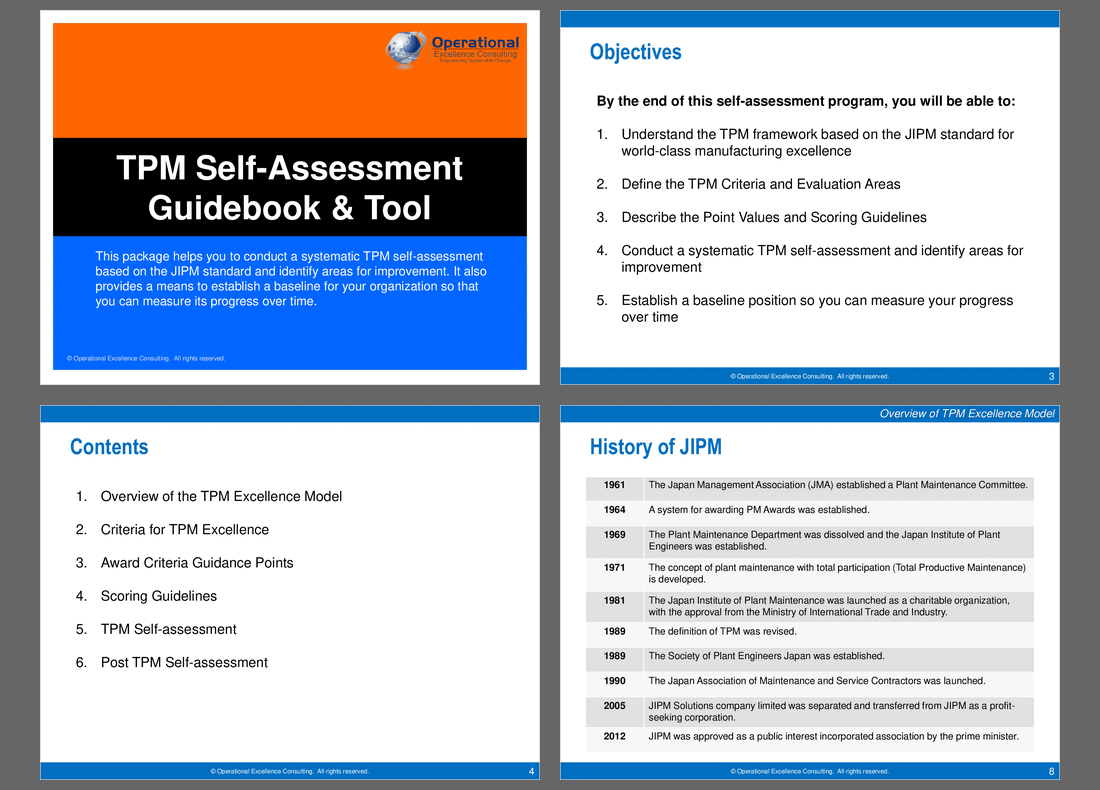
LEARNING OBJECTIVES
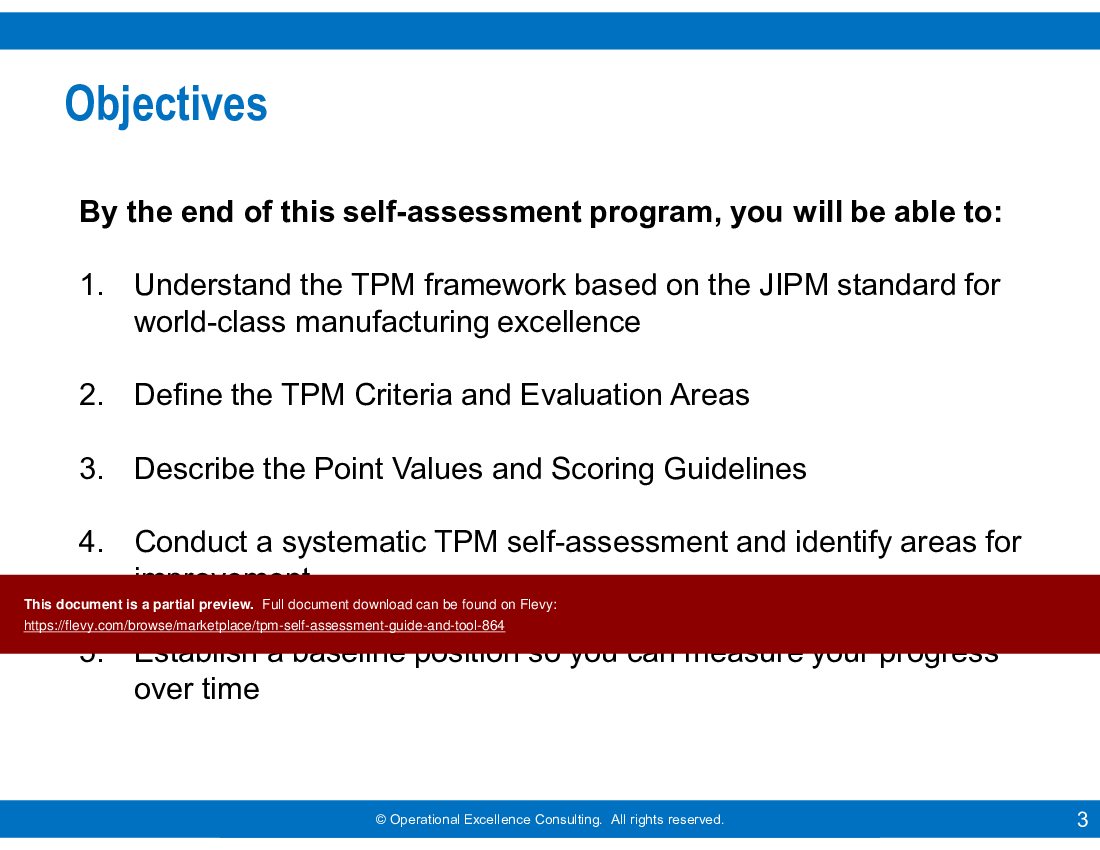
Upon completing this self-assessment program, you will:
1. Grasp the TPM framework, based on the JIPM standard for world-class manufacturing excellence.
2. Define the TPM Criteria and Evaluation Areas.
3. Comprehend Point Values and Scoring Guidelines.
4. Execute a structured TPM self-assessment, pinpointing areas for enhancement.
5. Establish a performance baseline, facilitating future progress measurement.
CONTENTS
1. Overview of the TPM Excellence Model
• About JIPM
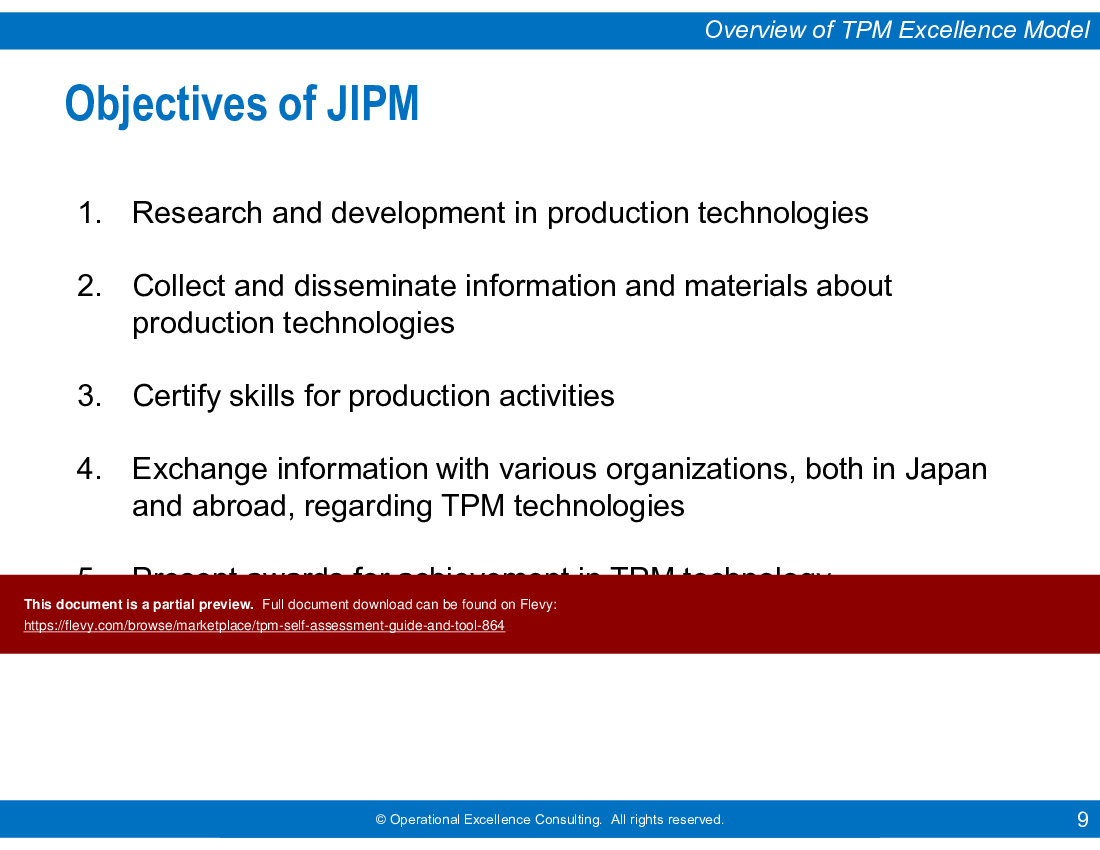
• Objectives of JIPM
• Purpose of TPM Excellence Award
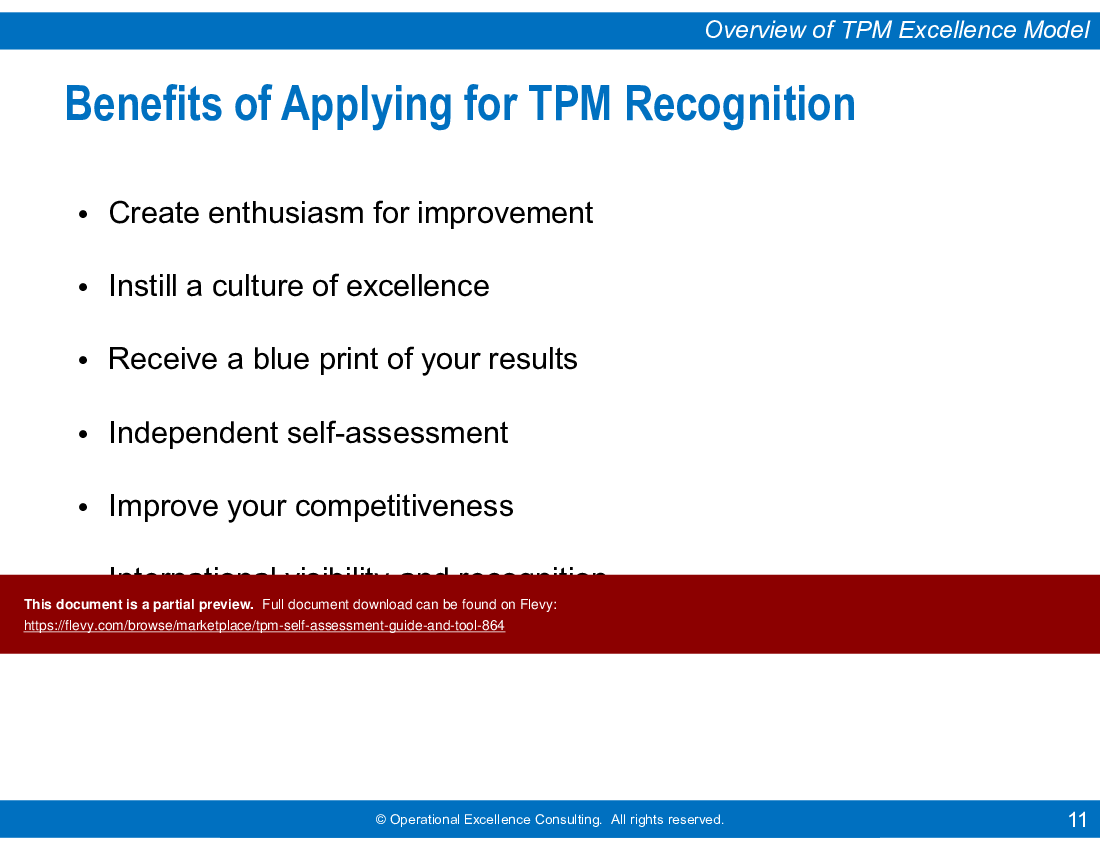
• Benefits of Applying for TPM Recognition
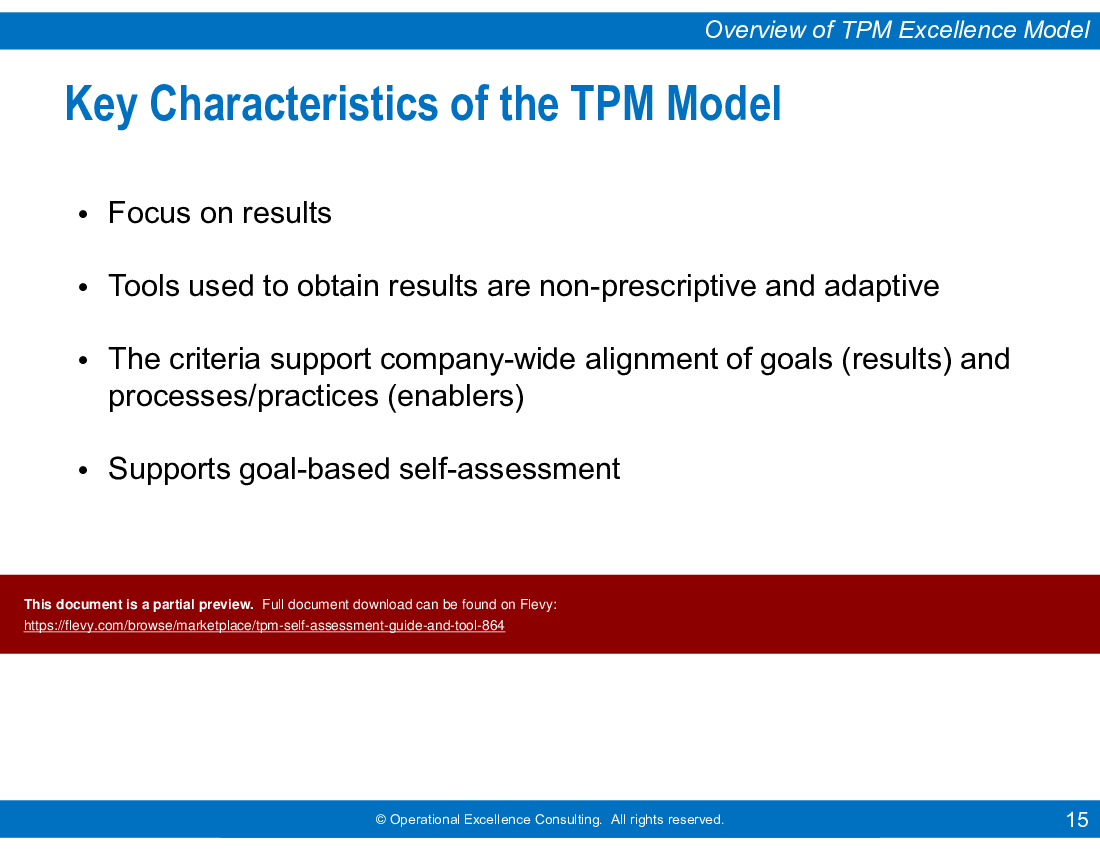
• Key Characteristics of the TPM Model
• JIPM Award Categories
• TPM Recognition – Reference Documents
2. Criteria for TPM Excellence
• TPM Excellence Model
• Assessment Criteria ("Basic Conditions")
• 10 Assessment Areas
• TPM Metrics: What to Measure?
• TPM Pillars & Activities
• Approach
• Deployment
• Results
3. Award Criteria Guidance Points
• Guidance Points Distribution
• Guidance Points for the 10 Areas of Evaluation
• Guidance Points for Each Checklist Item
4. Scoring Guidelines
• Scoring Guidelines – Bands 1, 2, 3, 4, 5 & 6
• Anatomy of Self-assessment Checklist
• How to Conduct the Self-assessment
• Guidelines on Using the Self-assessment Tool
• Scoring Each Category & Item
• Writing the Strengths & Areas for Improvement
5. TPM Self-assessment
• Purpose of Self-assessment
• Role of Self-assessment Team
• Senior Management Commitment
• The Self-assessment Cycle
6. Post TPM Self-assessment
• Follow-up Actions
*Note: The Japan Institute of Plant Maintenance (JIPM) is a nonprofit research, consulting, and educational organization that helps companies increase organizational efficiency and profitability through improved maintenance of manufacturing equipment, processes, and facilities. The JIPM is the sponsoring organization for the TPM Excellence Award, awarded annually to recognize excellence in company-wide maintenance systems. Based in Japan, JIPM is the innovator of methodologies that have been implemented around the world.
TPM-related training presentations that you may be interested:
1. Overall Equipment Effectiveness (OEE)
2. Total Productive Maintenance (TPM)
3. Autonomous Maintenance (Jishu Hozen)
4. Focused Improvement (Kobetsu Kaizen)
5. Quality Maintenance (Hinshitsu Hozen)
6. Planned Maintenance
7. TPM Team Guide
8. Autonomous Maintenance Audit Checklists
The guidebook outlines the mission and objectives of JIPM, emphasizing the importance of safe, reliable production and maintenance activities. It also details the ten key assessment areas and the scoring guidelines to help organizations achieve world-class TPM standards.
Got a question about the product? Email us at support@flevy.com or ask the author directly by using the "Ask the Author a Question" form. If you cannot view the preview above this document description, go here to view the large preview instead.
Executive Summary
The TPM Self-Assessment Guide & Tool is designed to facilitate a systematic evaluation of Total Productive Maintenance (TPM) practices based on the Japan Institute of Plant Maintenance (JIPM) standards. Developed by an experienced JIPM-certified TPM instructor, this resource enables organizations to identify areas for improvement while establishing a baseline to measure progress over time. Users will gain insights into the TPM framework, scoring guidelines, and evaluation criteria, empowering them to enhance operational efficiency and achieve world-class manufacturing excellence.
Who This Is For and When to Use
• TPM coordinators and practitioners looking to implement or enhance TPM practices
• Operations managers aiming to improve equipment effectiveness and maintenance strategies
• Quality assurance teams focused on integrating TPM into quality management systems
• Senior management seeking to drive a culture of continuous improvement
Best-fit moments to use this deck:
• During the initial phases of TPM implementation to assess current practices
• When preparing for JIPM TPM Excellence Award applications
• As part of ongoing performance reviews to track improvements in TPM practices
Learning Objectives
• Understand the TPM framework based on JIPM standards for manufacturing excellence
• Define TPM criteria and evaluation areas for effective self-assessment
• Describe point values and scoring guidelines for assessment
• Conduct a systematic TPM self-assessment to identify improvement opportunities
• Establish a baseline position to measure progress over time
Table of Contents
• Overview of the TPM Excellence Model (page 1)
• Criteria for TPM Excellence (page 19)
• Award Criteria Guidance Points (page 30)
• Scoring Guidelines (page 34)
• TPM Self-assessment (page 47)
• Post TPM Self-assessment (page 52)
Primary Topics Covered
• TPM Excellence Model - A comprehensive framework detailing the components and pillars of TPM, emphasizing the importance of a structured approach to maintenance and productivity.
• Criteria for TPM Excellence - Key assessment criteria that organizations must meet to achieve TPM excellence, including policies, objectives, and evaluation areas.
• Award Criteria Guidance Points - Detailed guidance on how to evaluate and score TPM practices based on JIPM standards.
• Scoring Guidelines - A systematic approach to scoring TPM practices across various dimensions, including approach, deployment, and results.
• TPM Self-assessment - A structured method for conducting self-assessments to identify strengths and areas for improvement within TPM practices.
• Post TPM Self-assessment - Follow-up actions and strategies to consolidate strengths and address areas for improvement after the self-assessment process.
Deliverables, Templates, and Tools
• Self-assessment tool to evaluate TPM practices against JIPM criteria
• Scoring guidelines template for assessing approach, deployment, and results
• Feedback report format to summarize strengths and areas for improvement
• Action plan template to address identified gaps in TPM practices
• Baseline position template to track progress over time
• Guidelines for forming a self-assessment team and conducting assessments
Slide Highlights
• Overview of the TPM Excellence Model slide illustrating the key components and pillars of TPM
• Scoring Guidelines slide detailing the scoring bands and evaluation criteria
• TPM Self-assessment process slide outlining the steps for conducting an effective assessment
• Post-assessment follow-up actions slide to guide organizations in implementing improvements
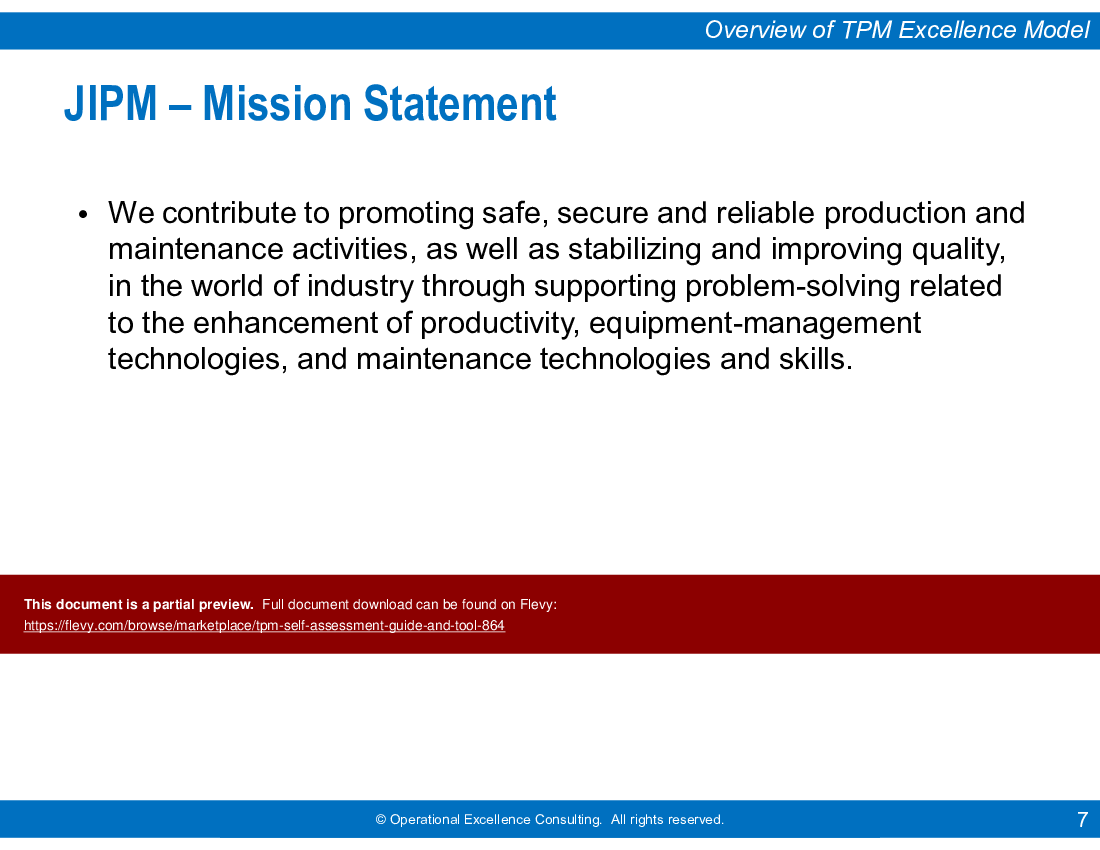
• JIPM mission statement slide emphasizing the importance of TPM in enhancing productivity and quality
Potential Workshop Agenda
TPM Framework Overview (60 minutes)
• Discuss the TPM Excellence Model and its components
• Review the importance of TPM in manufacturing excellence
Self-Assessment Training (90 minutes)
• Introduce the self-assessment tool and scoring guidelines
• Conduct a practice assessment using the tool
Action Planning Session (60 minutes)
• Identify strengths and areas for improvement
• Develop action plans to address identified gaps
Customization Guidance
• Tailor the self-assessment tool to reflect specific organizational policies and objectives
• Adjust scoring criteria based on the unique operational context of the organization
• Incorporate organizational terminology and metrics into the assessment process
Secondary Topics Covered
• History and evolution of the JIPM and its impact on TPM practices
• Benefits of TPM recognition and awards for organizations
• Integration of TPM into broader operational excellence frameworks
• Role of senior management in driving TPM initiatives
• Importance of continuous improvement and benchmarking in TPM
FAQ
What is the purpose of the TPM Self-Assessment Guide & Tool?
This guide and tool help organizations systematically evaluate their TPM practices based on JIPM standards and identify areas for improvement.
Who can use the TPM Self-Assessment Guide & Tool?
Any manufacturing, packaging, or process organization can utilize this tool, regardless of size or maturity.
How do I conduct a self-assessment using this tool?
Follow the structured process outlined in the guide, which includes rating statements based on approach, deployment, and results.
What are the key components of the TPM Excellence Model?
The model includes pillars such as autonomous maintenance, planned maintenance, quality maintenance, and education and training.
How can organizations benefit from applying for TPM recognition?
Organizations can create enthusiasm for improvement, instill a culture of excellence, and gain international visibility and recognition.
What scoring guidelines are used in the self-assessment?
The scoring guidelines provide a framework for evaluating approach, deployment, and results across various assessment areas.
What follow-up actions are recommended after the self-assessment?
Organizations should analyze feedback, develop action plans, and set targets to achieve key milestones based on the assessment results.
How does senior management contribute to the self-assessment process?
Senior executives provide direction, actively participate, and prioritize the output of the self-assessment for effective planning.
What is the importance of establishing a baseline position?
Establishing a baseline allows organizations to measure progress over time and track improvements in TPM practices.
Glossary
• TPM - Total Productive Maintenance, a holistic approach to maintenance that maximizes equipment effectiveness.
• JIPM - Japan Institute of Plant Maintenance, the organization that sets TPM standards.
• Self-assessment - A systematic evaluation of current practices against established criteria.
• Scoring Guidelines - A framework for assessing the effectiveness of TPM practices.
• Continuous Improvement - Ongoing efforts to enhance products, services, or processes.
• Baseline Position - The initial measurement used to track progress over time.
• Pillars of TPM - Key areas of focus within the TPM framework, including autonomous maintenance and quality maintenance.
• Feedback Report - A summary of strengths and areas for improvement following the self-assessment.
• Action Plan - A strategic document outlining steps to address identified gaps in TPM practices.
• Benchmarking - Comparing practices and performance metrics to industry standards or best practices.
• Management Commitment - The active support and involvement of senior leaders in TPM initiatives.
• Evaluation Areas - Specific criteria used to assess TPM practices and performance.
• Training and Development - Programs aimed at enhancing employee skills and knowledge related to TPM.
• Operational Excellence - A philosophy focused on continuous improvement and maximizing efficiency.
• Recognition - Acknowledgment of an organization's achievements in implementing TPM practices.
• Assessment Criteria - Standards used to evaluate the effectiveness of TPM implementation.
• Engagement - The involvement of employees and management in TPM activities.
• Results - The outcomes achieved through effective TPM practices.
• Deployment - The implementation of TPM strategies across the organization.
• Approach - The methods and techniques used to achieve TPM objectives.
Source: Best Practices in TPM PowerPoint Slides: TPM Self-Assessment Guide & Tool PowerPoint (PPTX) Presentation Slide Deck, Operational Excellence Consulting
This document is available as part of the following discounted bundle(s):
Save %!
TPM Consultant Toolkit
This bundle contains 4 total documents. See all the documents to the right.
Save %!
Complete TPM Implementation Toolkit
This bundle contains 5 total documents. See all the documents to the right.
|
Receive our FREE presentation on Operational Excellence
This 50-slide presentation provides a high-level introduction to the 4 Building Blocks of Operational Excellence. Achieving OpEx requires the implementation of a Business Execution System that integrates these 4 building blocks. |